The problem
Marker-based biomechanics labs are expensive and immobile — a fixed cage of high-speed cameras, a calibration ritual, a technician, and a $250k+ install. The moment you want to capture an athlete somewhere that isn't the lab you can't.
Uplift Labs' founders had built the computer-vision and 3D-kinematics IP that could replace that rig with two consumer iPhones. They needed mobile and video engineering they didn't have on the team. The bar was high: every frame on camera A had to be perfectly time-aligned with every frame on camera B, at 240 FPS. Nobody had pulled that off on commodity hardware before.
Why they picked us
Uplift needed a team whose centre of gravity is engineering, not UI — with a long track record of shipping high-grade, frame-smooth native apps where performance and correctness matter as much as the pixels. Senior architects on every call from day one, no junior bait-and-switch; deep iOS/Android performance experience; and a willingness to own the whole vertical.
“Appmetry didn't act like a vendor. They built Uplift Capture and Uplift Coach with the depth of a senior in-house team — kinematics, video pipelines, real-time drawing tools, all of it.”
— Jonathan Wills, CTO, Uplift Labs
Uplift Capture — a biomechanics lab in two iPhones
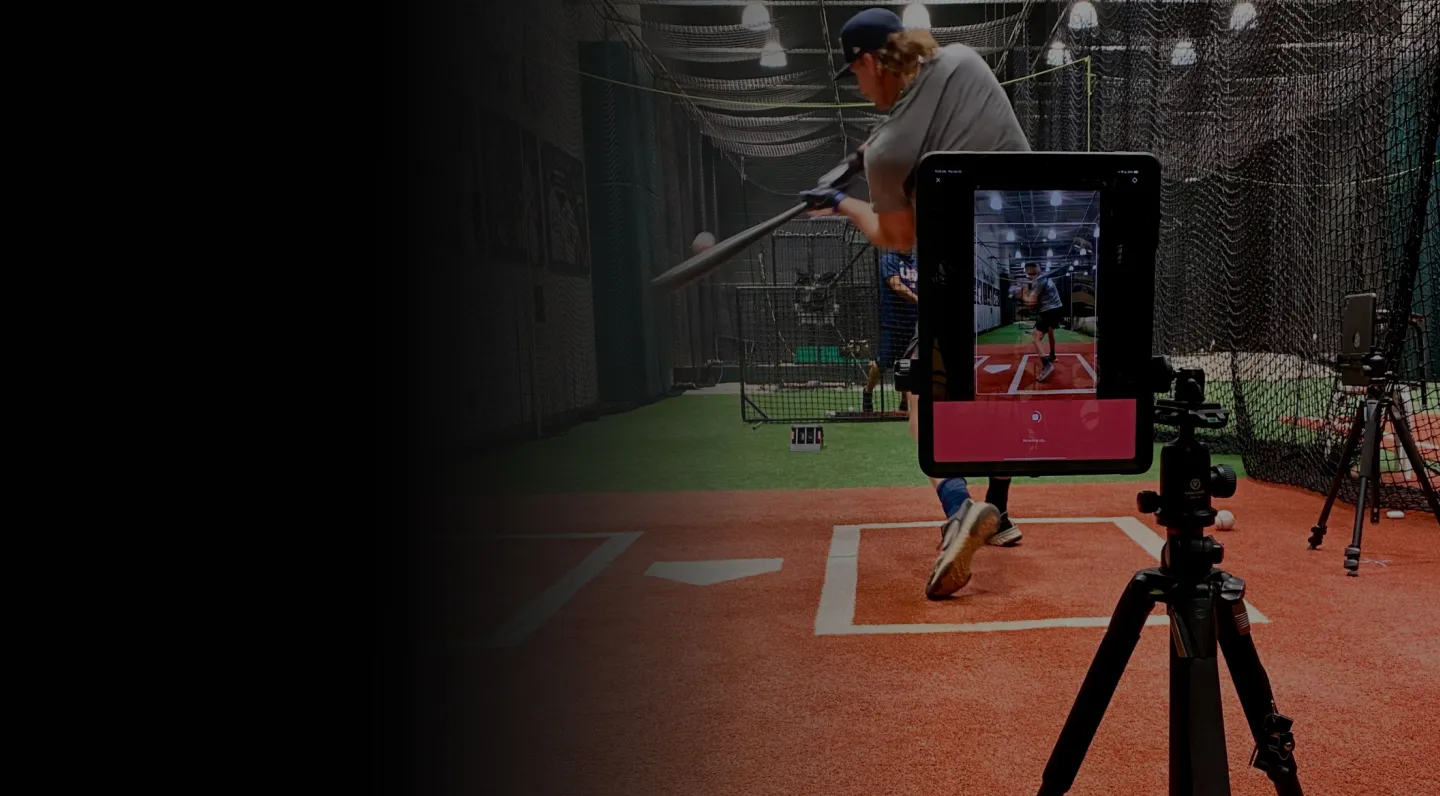
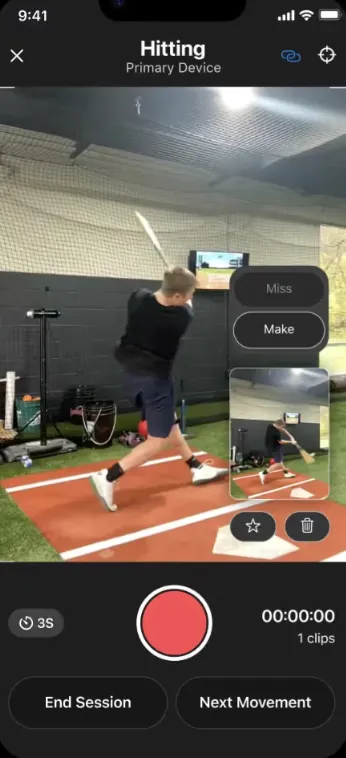
Two iOS devices on tripods, time-synced over Bonjour, calibrated in one quick handshake, recording from two angles into a shared session. Sessions queue locally if there's no signal.
The hard part wasn't the cameras — it was the sync. We engineered a custom multi-device synchronisation algorithm: a Bonjour-paired control plane, our own monotonic shared clock that survives Wi-Fi jitter, sub-frame timestamp negotiation, and a per-frame correction pass. The result: perfect frame-accurate sync between two consumer iPhones at 240 FPS, zero drift over a full session.
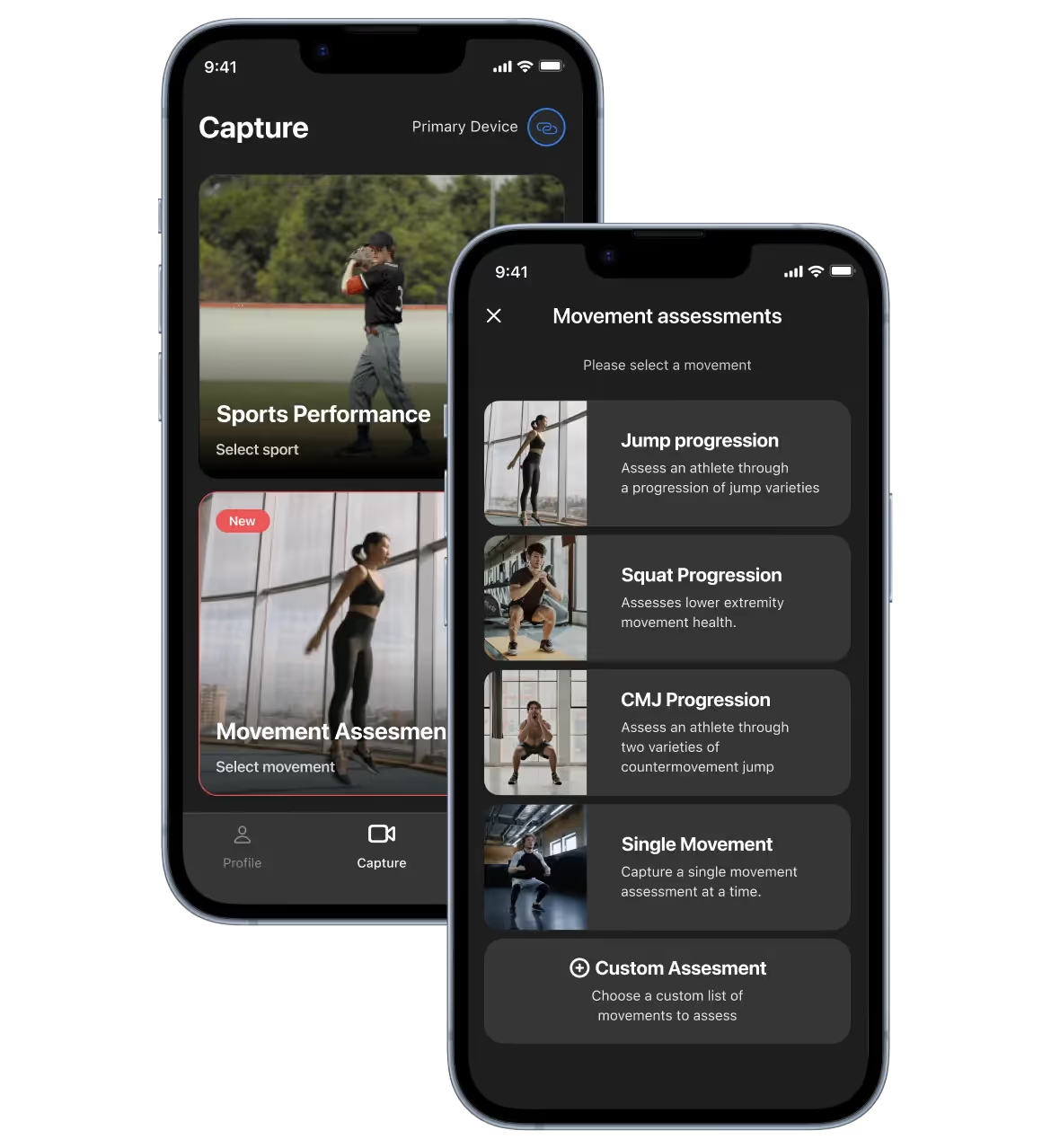
Step 01Session mode
Sports performance · movement assessments
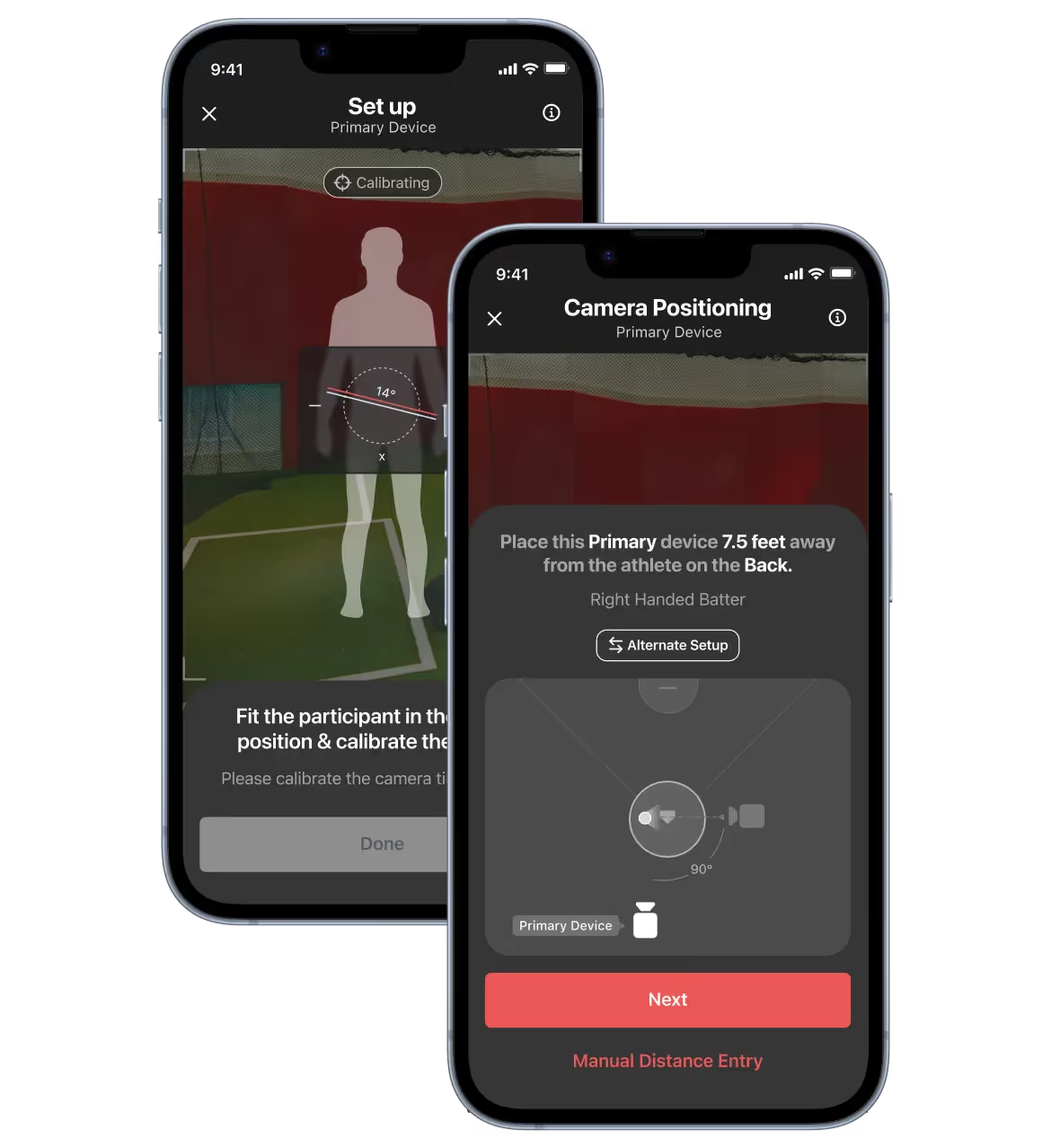
Step 02Setup
Two iPhones, two tripods, sub-minute pairing
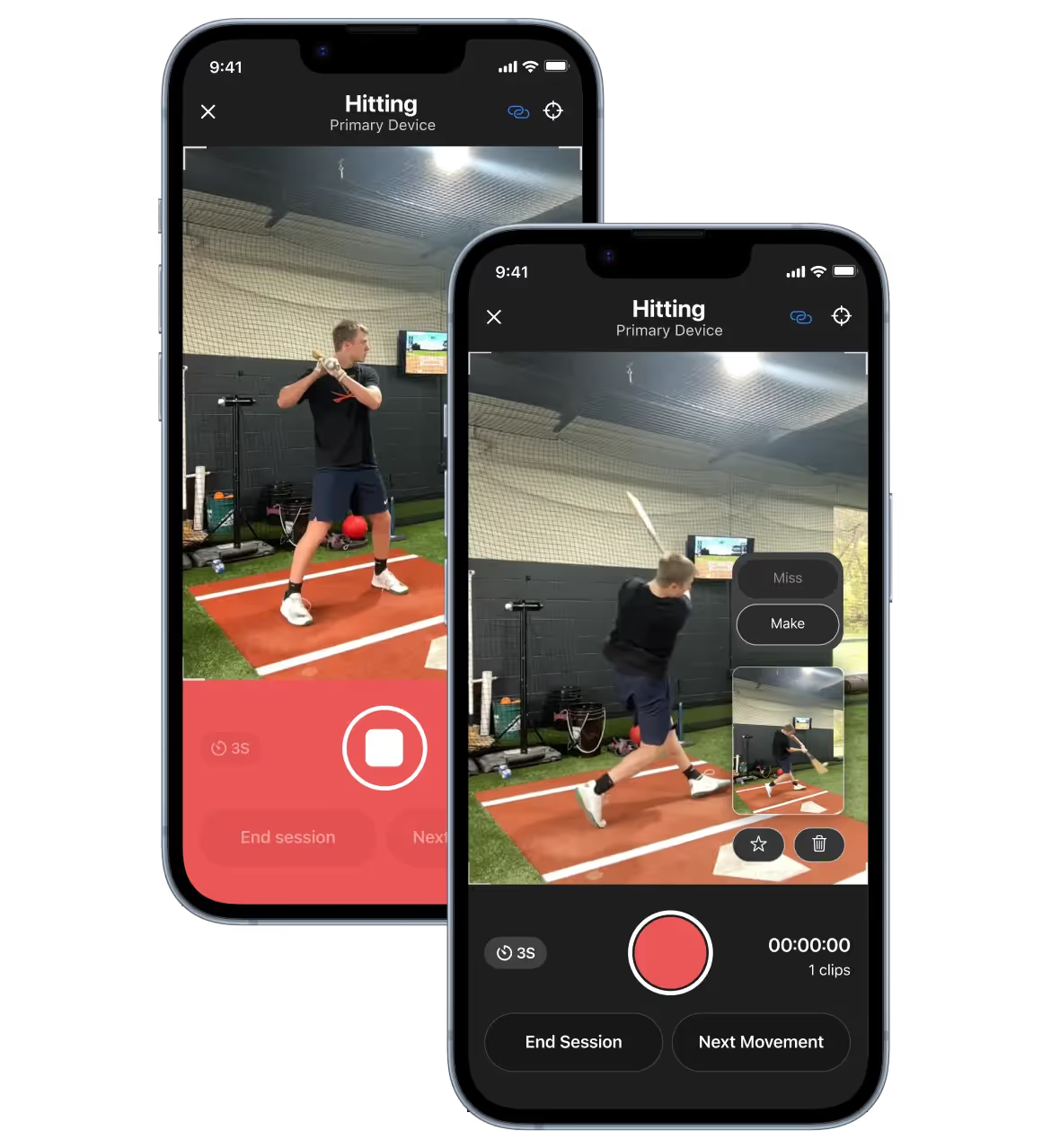
Step 03Capture
Time-synced video · 3D kinematics

Uplift Coach — drawing on live video
Capture answers “what happened.” Coach answers “what should I tell the athlete to change.” A live and recorded video tool with a drawing canvas layered on top — angles, lines, traces, frame-step, side-by-side — built over WebRTC. The Metal-backed canvas renders hundreds of strokes a second over 1080p video without dropping a frame; strokes persist with frame anchors so markup is exactly where a coach left it a year later.


In production
Half of MLB. NCAA partnerships across the country. Every capture goes through code we wrote.
Uplift Vision — a biomechanics lab in a single camera (2026)
The breakthrough: take an arbitrary broadcast video feed — one camera, one angle, no calibration — and recover full 3D kinematics from it. We co-built the AI models: a pose-and-depth backbone trained on Uplift's own multi-camera ground-truth, per-sport priors that constrain the solver where physics will, a temporal smoother that exploits 60+ fps broadcast feeds. Broadcast-grade kinematic overlays from existing camera infrastructure — no rig, no instrumentation.
Step 01Ingest
One broadcast feed, no rig
Step 02Analyse
25+ keypoints from one angle
Step 03Broadcast
Live overlays · aired on ESPN
“Uplift Vision enabled an overlay of comparisons of top prospects' swing mechanics with MLB player averages, providing our viewers with unprecedented insights in live coverage.”
— Phil Orlins, VP Production, ESPN
Complete automation testing
A platform half of MLB depends on can't be QA'd by hand. We stood up an end-to-end automation suite: iOS & Android UI flows on real devices via XCUITest and Espresso; web flows in Selenium on BrowserStack; capture-quality regressions against a 100+ session golden corpus; kinematic-accuracy diffs that fail a build if a model change moves a joint angle outside tolerance; WebRTC call-quality probes.
Two outcomes: production releases moved from monthly to fortnightly without a regression, and the engineering team can refactor ML models with confidence that the kinematic-accuracy harness catches a silent degradation before a coach ever sees it.
The stack
The build
Feb 8, 2020
Engagement starts
iOS Capture v1 — pair, record, upload. The smallest thing that proved the core promise: two iPhones, synced clocks, a clean upload, an athlete on screen.
2021
240 FPS perfect sync · Cloud visualizer
Industry-first frame-accurate two-phone sync. We ship the custom multi-device synchronisation algorithm. The first time a coach watches a synced 3D rendering of their athlete in a browser tab.
2022
Uplift Coach
Drawing canvas over WebRTC video. Metal-backed canvas, frame-anchored strokes, side-by-side comparison, async coach mode. Shipped to the first MLB org pilots.
2023
Android parity + automation
Capture on Android, full automation suite. Pose on-device with Google ML Kit, resilient upload. End-to-end test automation across iOS, Android, and web goes live.
2024–2025
Coach Reports + Org dashboard
Centralised org dashboard, PDF coach reports. Manage athletes across teams, share insights, ship Coach Reports as a deliberate post-session deliverable.
2026
Single-camera AI · ESPN debut
Uplift Vision airs on the 2026 MLB Draft. Live biomechanics overlays — single-camera AI kinematics in production on ESPN.
What changed
Uplift Capture is now used by roughly half of MLB teams and a deep bench of NCAA programs. A pre-season intake that used to take an hour per athlete in a lab now runs at one athlete per minute on a field. In 2026, Uplift Vision extended the same accuracy bar to a single broadcast camera — live, on ESPN.

Where we are now
Six years in. We're the engineering team behind Capture, Coach, and Vision; Uplift's team owns the science, product, and customers; the on-call pager comes to us. The work has matured into the kind of partnership that doesn't generate press releases — just shipped releases, every other week, for years. If you're building a vertical mobile + video-AI product and the gap between research and production is the constraint, this is the work we'd point you to first.